

Sous vide turkey breast is the secret to juicy, evenly cooked turkey every time. Cook at 140°F (60°C) for 3 hours, then finish in the oven for a beautifully crisp, golden skin. Perfect for Thanksgiving or any Sunday dinner.
Updated October 2025 – Verified 140°F / 60°C for 3 hours, clarified finish and sage-butter steps for consistency.
At a Glance
- Cut: Skin-on Turkey Breast
- Temperature: 140°F / 60°C
- Cook Time: 3 hours
- Finish: Oven roast at 450°F for 10–15 minutes
- Texture: Juicy, tender, and flavorful
A buttery, herb-crusted turkey breast that’s juicy throughout and crisp on the outside.
Sous vide turkey breast is an absolute game-changer. Cooking sous vide allows you to make perfectly juicy and tender turkey breasts, every single time. Time to say goodbye to the days of dry turkey, and hello to juicy meat cooked exactly how you want it.
Cooking more than the breast this year? We also cover how to sous vide a whole turkey, the Foolproof spatchcocked turkey, and sous vide turkey legs for the dark meat.
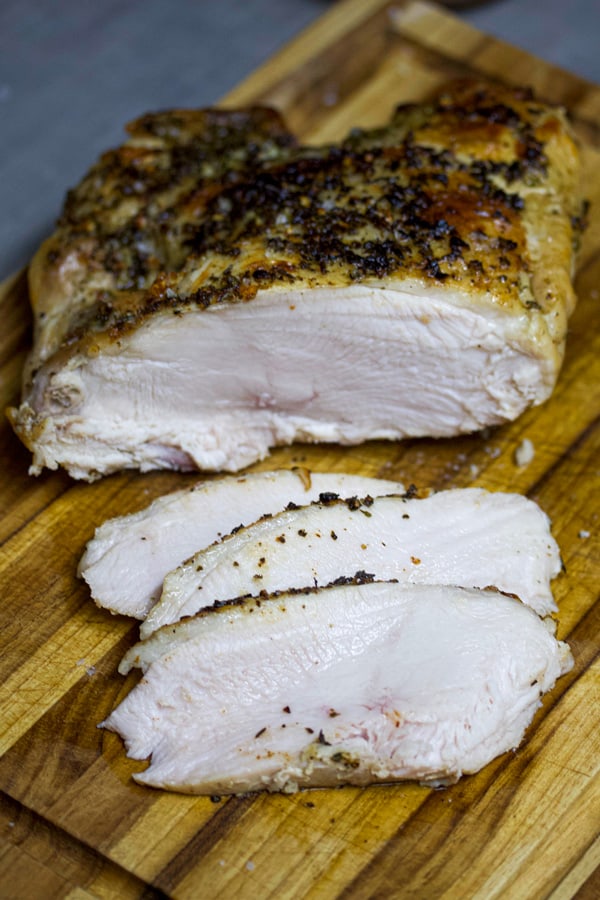
For this recipe, I created salty, garlicky and herbaceous compound butter that perfectly compliments the flavor profile of the turkey. This butter compound has all the salt and flavor the turkey breast needs for epic taste.
Furthermore, coating the breast in this butter amplifies the Malliard reaction in the oven, which creates a picture-worthy sear.
Add sous vide turkey and garlic herb compound butter together and you have a fool-proof method of making an unforgettable meal.
Bone-in or Boneless Turkey Breast?
The first step is determining whether you should purchase bone-in or boneless turkey breast for this recipe. The quick answer, either cut will result in tender, juicy meat. Also, either can be used interchangeably for most sous vide recipes.
That being said, we prefer using bone-in turkey breast. They tend to be juicer and more flavorful, and the meat around the bone is to die for.
Ever thought about How to Sous Vide a Whole Turkey?
We show you how! Book mark it for later, back to the turkey breast haha!
If you are breaking down a whole bird yourself, take the breasts off whole and keep the tenderloins, which cook in the same bag. The legs need a much higher temperature, so they get their own bath. See our sous vide turkey legs at 165°F / 74°C.

Packaging
An essential part of cooking sous vide is putting ingredients in an air-tight bag or container. The two most common techniques to package your ingredients are vacuum sealing and using the water displacement method.
A vacuum sealer removes all the air and seals the contents of a plastic bag through a vacuum. Ensuring the food is airtight and properly sealed prevents the bag from floating, which can result in uneven cooking.
The displacement method is a technique where you first place your food and marinades in a sous vide bag, submerge the bag in a container of water, and allow the pressure to force all the air out of the bag.
Both of these methods work for this recipe, so use whichever you feel more comfortable with!
Label every bag with the cut, the temperature and the time. If you are cooking the legs as well, you will have bags going in and out of the water at different times.
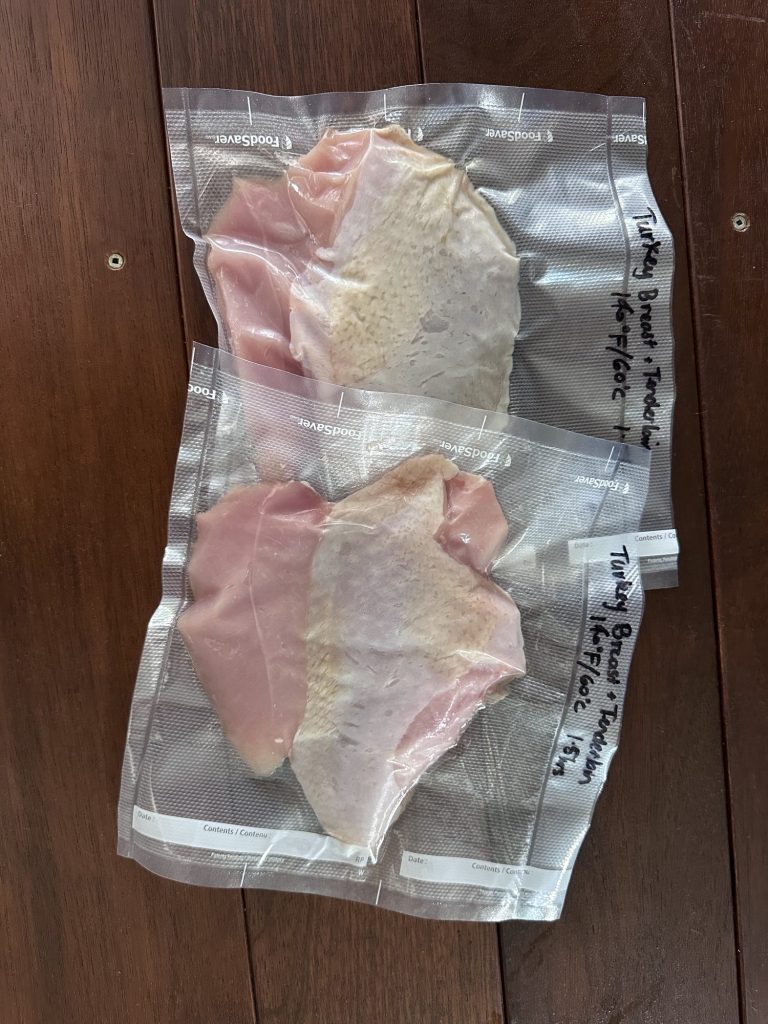
Can You Sous Vide Frozen Turkey Breast?
The quick answer is, absolutely! Cooking frozen foods sous vide is an ultra convenient, safe way to prepare your protein. Just take the food directly from the fridge, repackage it (unless you know the bag is sous vide safe) and let the sous vide work its magic.
The only thing you’ll need to adjust is the cook time. If you are cooking frozen turkey breast sous vide we recommend adding an additional hour to the cook time, so four hours total.
Time and Temperature
We found that cooking the turkey breast at 60C/140F for 3 hours is the perfect combination. Leaving the breast in for 3 hours results in a juicy bird. Also, cooking it at a temperature of 140F is the sweet spot for tender and succulent meat.
The 3 hours suits a breast up to about 1¾ inches (45 mm) thick at its thickest point. For a thicker breast, add time: Douglas Baldwin’s poultry pasteurization table in A Practical Guide to Sous Vide Cooking gives about 3¼ hours at 140°F / 60°C for 2 inches (50 mm) and 4½ hours for 2½ inches (65 mm).
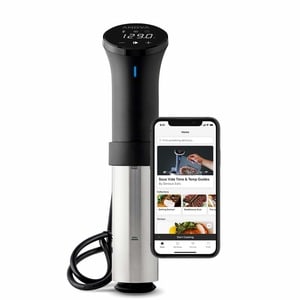
Just make sure you have a reliable sous vide that accurately regulates the temperature of the bath or your results may vary (check out the Anova or Joule). If you want to explore other time and temperature options, check out our cooking guide here.
Placing in an Ice Bath
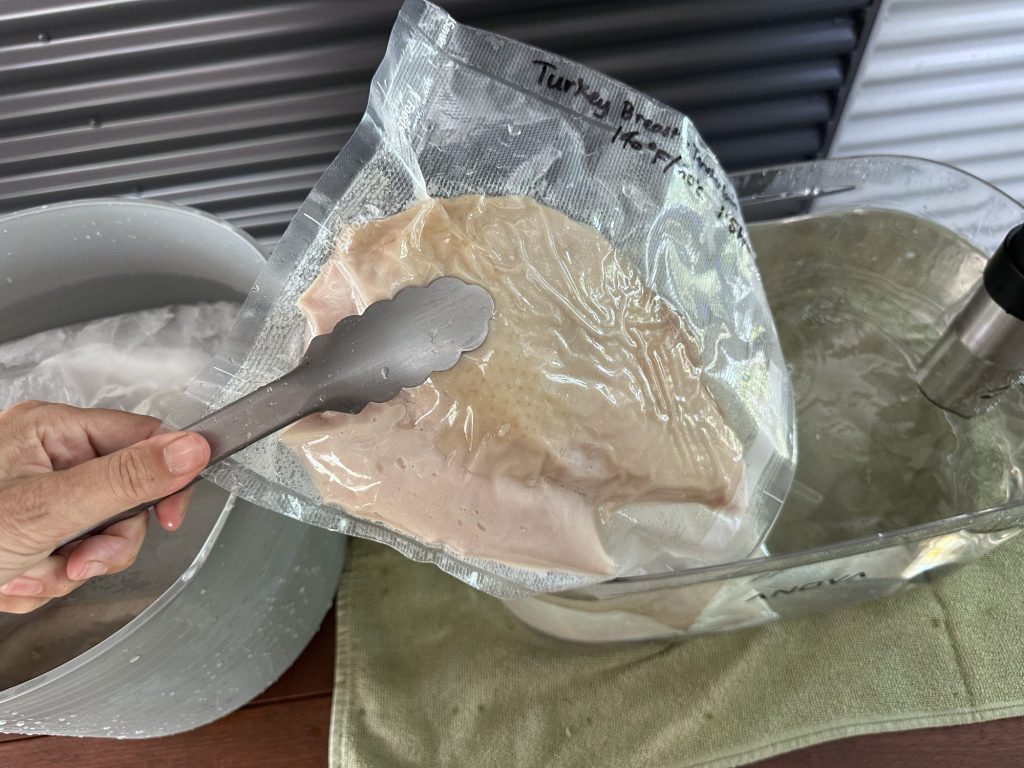
Once the turkey breast is finished cooking in the sous vide, I recommend immediately transferring it to an ice bath. An ice bath is the term for a big bowl or cooler filled with ice and water.
Placing the bird in the ice bath for 10 minutes will cool down the external temperature and make it easy to spread the butter compound. If the external temperature is not cooled, the butter will instantly melt.
Finishing the Turkey Breast
Searing is the most critical step in the sous vide process. Getting a deep, rich sear can make your food look like it is Michelin star quality. Failing to do so will make your dinner guests wonder why they let you cook again.
If you want to get an amazing sear on your turkey breast, you’ve got to:
1. Pat your meat completely dry
2. Coat generously with compound butter
3. Finish at high temps to achieve a deep, rich sear
Applying Compound Butter

First, pat the meat completely dry using paper towels. After the meat is dry, coat the breast generously with the compound butter. The most effective way to spread the butter evenly on the bird is with fork or a silicon spatula.
Note that the external temperature of the turkey breast needs to be cool to properly apply butter. Please drop the breast in an ice bath or chill in a refrigerator until chilled prior to applying the butter.
Searing the Breast
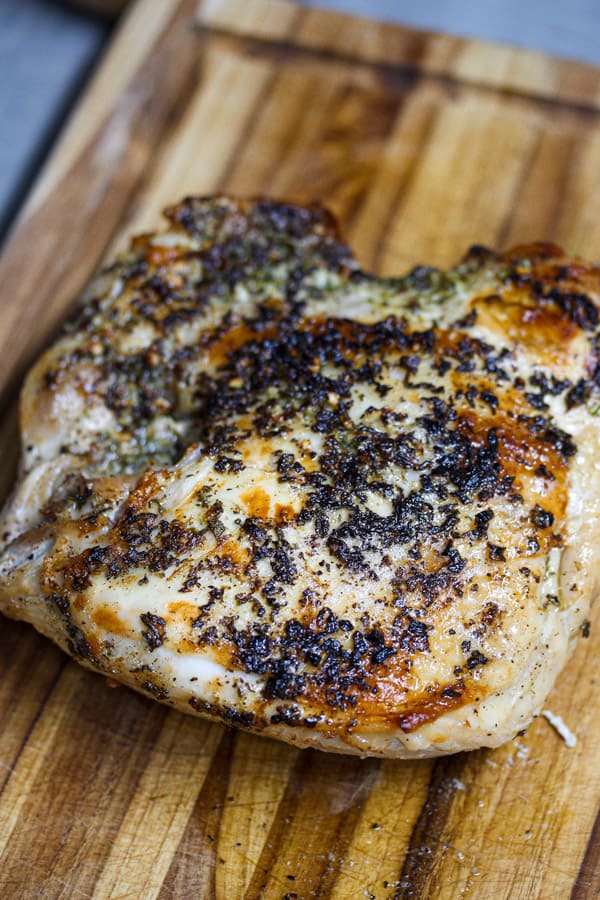
Last, cook the turkey breast at high temperatures to achieve a deep, rich sear. We suggest baking the breast in the oven at 450F for 10 to 15 minutes.
This high temperature ensures the butter will melt quick, which amplifies the Malliard reaction and results in a nice crust. Also 10 minutes will make sure the internal temperature of the bird is at serving temperature.
Serving it cold
Sous vide turkey breast makes amazing cold meat, and so does sous vide chicken breast. If you are using it as a cold cut, skip the searing. Chill the bag in ice water straight from the bath, refrigerate it, then slice it thin. It works for a cold turkey platter at Thanksgiving, and just as well for meal prep, lunches and salads through the week.
How long to chill and reheat: the 10 minute ice bath above only cools the surface for the butter. To chill a breast right through for later, leave the sealed bag in ice water that is at least half ice for about 50 minutes at 1 inch (25 mm) thick, 1¾ hours at 1½ inches (40 mm), 2¾ hours at 2 inches (50 mm) or 4¼ hours at 2½ inches (65 mm). To reheat it from the fridge, put the bag back in a 140°F / 60°C bath for about 1¼, 2½, 3½ or 5½ hours for the same thicknesses. These are the slab-shaped times from Baldwin’s cooling and heating tables, the more cautious of his columns.
Special Equipment
Sous Vide Machine – This one is obvious. To cook sous vide, you’re going to need a device to precisely regulate the temperature of the bath water. The two best sous vide machines in the game right now are the Anova Precision Cooker and the Breville Joule.
The main difference between the two is that with the Anova you can control the device both manually and with a mobile device, and with the Joule you can only control the device by using your mobile device. Either way, both sous vide machines are top class and you can’t go wrong with either choice.
12-quart Container – Although you can use a basic stockpot for your sous vide cooking needs, I highly recommend buying a large plastic container. They are inexpensive and spacious, so you won’t have to worry about cooking a big roast in a small pot. I recommend a 12 quart Rubbermaid container, as it is BPA free, sturdy, and large enough for just about anything you will be cooking.
Container Lid – If you are going to buy a plastic container, I highly suggest buying a compatible lid for it. When you sous vide for a long duration, the heat of the water causes evaporation. With a lid, it eliminates a majority of the evaporation so you can cook for hours care-free.
Roasting Pan and Rack – Having a quality roasting pan for this recipe can help achieve an excellent sear in the oven. We use this stainless steel roasting pan because it’s perfect for larger roasts like prime rib roasts and turkey, and it comes with both a flat roasting rack and a V-shaped rack for flexibility.
Next Level Sous Vide –Looking to take your sous vide skills to the next level? The Next Level Sous Vide eCookbook will push your culinary boundaries with 65 delicious recipes that are equally approachable and tasty. With pro tips and a detailed explanation of the sous vide process, you will be on your way to maximize your sous vide skills.
Check out our full list of recommended gear here.
FAQs
Can I use boneless turkey breast instead of bone-in?
Yes — boneless works just fine. The meat will still be tender and juicy; bone-in may offer a bit more flavour near the bone, but both yield excellent results.
Can I sous vide the turkey breast from frozen?
Yes. Increase the cook time by about an hour (so 4 hours total) to ensure safe pasteurization and even cooking.
What if I prefer a firmer, roast-like turkey texture?
For a firmer, more traditional texture, you can increase the water bath temperature to about 145 °F (63 °C) — many cooks prefer that for a roast-style result.
How do I get crispy, golden turkey skin after sous vide?
After sous-vide cooking, pat the turkey dry thoroughly and finish with a high-heat oven roast or sear — ideally using some butter or oil to help the skin crisp and brown nicely.
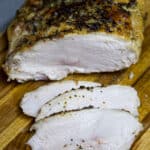
Sous Vide Turkey Breast Recipe
Ingredients
- 2 – 3 lb skin-on turkey breast half
- 4 sage leaves, whole
- 4 tablespoon unsalted butter, softened
- 2 cloves garlic, minced
- 1 ½ teaspoon fresh thyme, chopped
- 1 ½ teaspoon fresh sage, chopped
- 1 teaspoon salt
- ½ teaspoon black pepper
Instructions
Preparation
Set sous vide machine to 60C/140F.
Place turkey breast in a sous vide bag with 4 sage leaves, and remove the air through a vacuum sealer or the displacement method. Drop turkey in the bath for 3 hours.
Finishing
In a bowl, mix together softened butter, garlic, sage, thyme, salt and pepper together until the compound butter is spreadable.
Remove bag from bath and immediately transfer to ice bath to chill for 10 minutes. Once cooled, discard sage, and place turkey breast on a paper towel lined cutting board. Thoroughly pat the turkey breast until dry.
Preheat oven for 450F. Spread half the garlic herbed compound butter underneath the skin of the turkey and the other half on top of the skin of the turkey. Place breast on a baking rack pan and cook for 10 – 15 minutes.
Remove turkey breast from oven. Let rest for 5 minutes. Carve the turkey breast into slices, and enjoy this delicious piece of meat. *Pro tip – brush the excess butter and garlic mixture from the pan onto each piece before serving.
Can I cook the wings with the breast?
Yes, and it is how I always do them. Bag the wings separately and cook them at 140°F / 60°C with the breast for about 1.5 hours, then finish them in the oven with everything else. They come out with a better texture than cooked with the legs.
What temperature for the turkey legs and thighs?
Dark meat needs 165°F / 74°C for about 3 hours to break down its connective tissue. With one circulator, cook the breast first, then turn the bath up for the legs. Our sous vide turkey legs recipe has the full method.



Can you prepare any of this ahead of time and if yes, at which step can you refrigerate (eg overnight and then on thanksgiving just do the last step?).